
Premium Sunglass Gifting for Large Events: What to Budget for 100, 250, and 500+ Guests
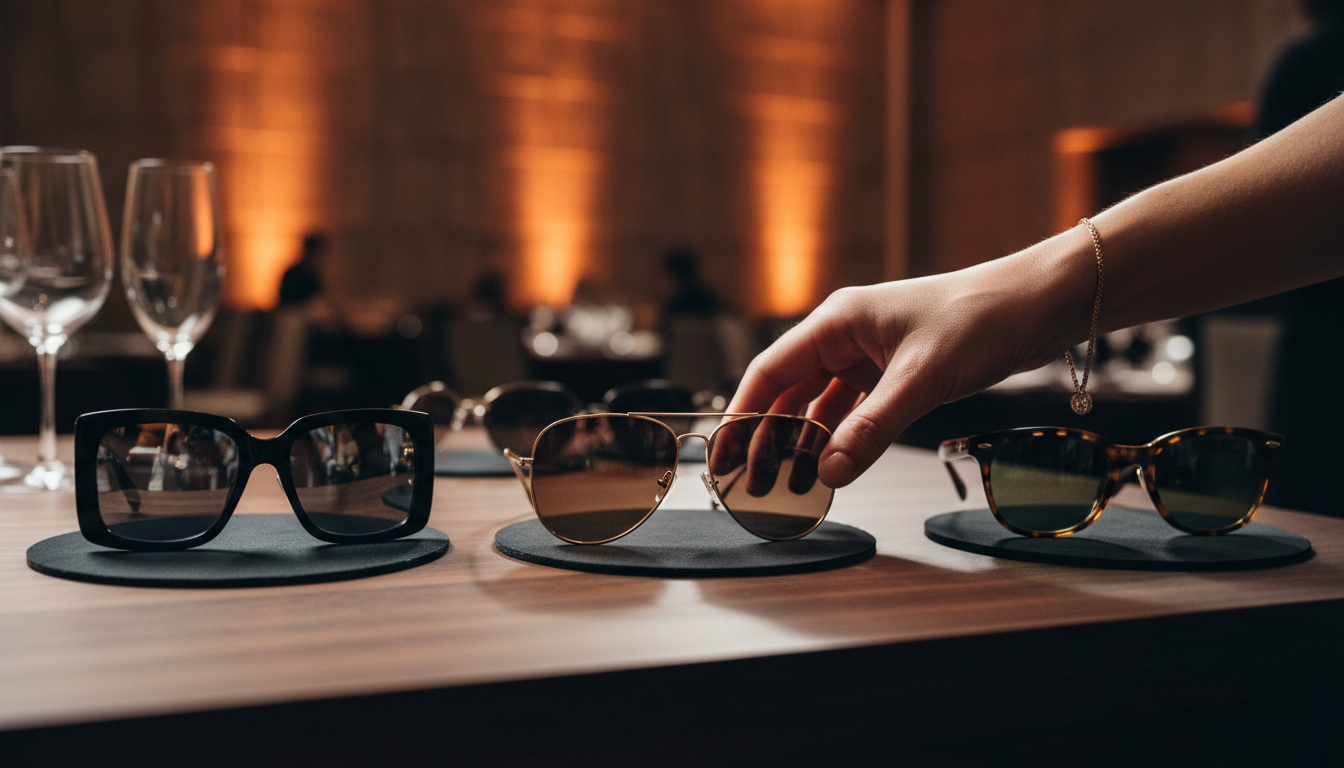
You've decided that premium sunglass gifting is the right move for your next large corporate event. Great call. But now comes the question every planner, procurement lead, and CFO needs answered before they can greenlight the budget: what does this actually cost when you're serving 100, 250, or 500+ guests?
Most gifting vendors bury their pricing behind a "request a quote" wall. That's frustrating when you're trying to build a preliminary budget, compare vendors, or make the internal case to leadership. This post is different. We're laying out the real cost structure behind premium sunglass gifting for large events — the line items, the variables that move the number, and the math that makes this pencil out against every alternative you're considering.
How Premium Sunglass Gifting for Large Events Is Actually Priced
Unlike commodity swag where you're paying a flat per-unit rate for branded stress balls, premium sunglass gifting operates on a tiered model driven by three variables: the number of guests, the sunglass tier you select, and whether you want an on-site activation or shipped VIP gift boxes.
The sunglass tier is the biggest lever. Ninety Six Shades offers three tiers — VIP Red, VIP Gold, and VIP Black — each granting access to a different range of designer brands. VIP Red features a curated selection of crowd-pleasing premium brands. VIP Gold opens up a broader mix of premium and designer options. VIP Black is the top tier, giving recipients access to over 1,000 styles including Gucci, Prada, Oliver Peoples, and other luxury labels.
For most corporate events, this tiered approach means you can right-size the gift to the audience. A 300-person sales kickoff might go VIP Gold for the full team and VIP Black for the top-performing President's Club winners. A 500-person client appreciation event might standardize on VIP Red to keep the per-guest cost accessible while still delivering a gift that people actually want to wear — and do.
The Budget Breakdown: 100 Guests vs. 250 Guests vs. 500+
Here's where most pricing conversations go wrong: they give you a single per-guest number without context. The reality is that premium sunglass gifting for large events involves both fixed and variable costs, and understanding the split helps you model the budget accurately.
Variable costs (scale with guest count): The sunglasses themselves are the primary variable. Each guest selects a pair from the tier you've chosen, and that pair is theirs to keep. The per-unit cost varies by tier, with VIP Red being the most accessible and VIP Black commanding a premium for luxury labels.
Fixed costs (don't scale linearly): On-site activation setup, display fixtures, sunglass specialist staffing for a baseline team, and custom branding elements (signage, cleaning cloths, co-branded inserts) represent largely fixed costs. This is where larger events get better economics — the fixed costs spread across more guests, bringing the blended per-guest rate down.
What does this mean in practice? A 100-guest activation carries a higher blended per-guest cost than a 500-guest activation at the same sunglass tier because those fixed logistics costs are divided among fewer people. The sunglasses-per-guest cost stays consistent, but everything around them gets more efficient at scale.
For a detailed look at the general pricing framework, see our full cost breakdown for on-site gifting activations. Below, we'll focus specifically on the large-event variables that move the budget.
Scaling the Activation: Multi-Station Setups for 250+ Guests
This is where premium sunglass gifting for large events gets logistically interesting — and where the right partner makes all the difference.
A single sunglass fitting station with one specialist can comfortably serve a certain number of guests per hour. For intimate events of 50-80 people over a 2-3 hour cocktail reception, one station works beautifully. But when you're scaling to 250 or 500+ guests, you need a multi-station approach to keep the experience premium while maintaining throughput.
Here's what scaling looks like in practice:
100 guests: Typically one to two fitting stations with two sunglass specialists. A standard cocktail reception window of 2-3 hours gives everyone ample time for a relaxed, personalized fitting. The footprint is compact — roughly 10x10 feet — and fits into almost any venue layout. Setup is straightforward, and the logistics are minimal.
250 guests: Two to three stations with three to four specialists. The display expands to showcase a wider selection, and the layout shifts to a flowing format where guests can browse at one station and get fitted at another. This is where the compound energy effect kicks in — the activation becomes a social destination within the event, not just a gift pickup point. Budget for a slightly larger footprint (roughly 15x20 feet) and an additional 30-45 minutes of setup time.
500+ guests: Four to six stations with a full team of specialists, potentially spread across multiple activation zones within the venue. At this scale, the activation is a centerpiece of the event. Flow management becomes a consideration — strategic placement near bars, lounge areas, or event transitions ensures natural foot traffic without bottlenecks. The complete planner's guide covers the logistical details of working with the Ninety Six Shades team to design a layout that matches your venue and event flow.
The Hidden Costs Most Vendors Won't Mention (And What's Actually Included)
One reason planners get burned on gifting budgets is that the quoted per-guest price doesn't always reflect the total cost of execution. Here's what to watch for — and what Ninety Six Shades includes that others often charge extra for.
What's typically included in the per-guest price:
The sunglasses (from the selected tier), professional sunglass specialists who handle one-on-one fittings and live frame adjustments, the full display setup and breakdown, custom branding elements, and the Perfect Pair Program — which gives every recipient 30 days of unlimited exchanges with free shipping until they find their ideal pair. This last element is a significant value-add that most planners don't initially factor in. It effectively eliminates the risk of guests receiving a gift they don't love, which is the silent killer of most corporate gifting programs.
What's NOT included (and you need to budget for separately):
Travel and accommodation for the sunglass specialist team. For events outside the company's home markets, the host covers flights and hotel for the on-site team. This is standard in the event industry and should be a line item in your event budget regardless of vendor. For a 100-person local event, this might be zero. For a 500-person destination event in Scottsdale or Miami, budget accordingly.
The important distinction: there are no hidden "setup fees," "branding surcharges," or "rush charges" that inflate the final invoice beyond what's quoted. When evaluating gifting companies, ask every vendor to confirm whether their quote includes setup, branding, and post-event exchange programs — you'll be surprised how many don't.
On-Site Activation vs. Shipped VIP Gift Boxes: A Cost Comparison for Large Groups
For large events, planners often weigh two approaches: bringing the on-site activation experience to the event or shipping VIP gift boxes to each guest before or after.
Both deliver a premium sunglass gift. The cost differences come down to what's around the sunglass itself.
On-site activations carry the staffing, setup, and travel costs described above — but they also deliver the experiential element that makes gifting memorable. The in-person fitting, the social energy of watching colleagues pick their styles, and the Instagram-worthy moment all contribute to a brand impression that a shipped box can't replicate. For events where the experience IS the gift — sales kickoffs, President's Club trips, client appreciation galas — the activation format justifies its premium.
VIP gift boxes eliminate travel and staffing costs but add per-unit packaging and shipping costs. For geographically distributed teams or post-event follow-ups, VIP boxes are often the right call. They're also an excellent complement to on-site activations — for example, sending VIP Black boxes to the 20 top clients who couldn't attend the event in person while running a VIP Gold on-site activation for the 300 who did.
Many large-event planners use a hybrid approach: the on-site activation as the centerpiece with VIP boxes shipped to those who couldn't attend or as a follow-up touchpoint that extends the event's impact. For a 500-person program, this might mean a 400-person on-site activation plus 100 shipped VIP boxes.
Why the Per-Guest Cost Tells Only Half the Story
Every procurement team and CFO will compare the per-guest cost of premium sunglass gifting against alternatives: branded swag bags ($15-40/unit), gift cards ($50-100/unit), room drops ($30-75/unit), or generic gift boxes ($50-150/unit). On a pure per-unit basis, premium sunglasses sit at a higher price point. That comparison misses the point entirely.
The cost-per-impression math changes the calculation. A branded tote bag might cost $12 per unit, but it gets used twice and thrown away — total impressions: maybe 5. A pair of designer sunglasses costs more per unit but gets worn hundreds of times over years. Every time the recipient puts them on — at the beach, driving to work, on vacation — that's a brand impression connected to the moment your company gave them something they actually wanted.
For large events, this ROI multiplier compounds. A 500-person activation doesn't just create 500 gifts. It creates 500 walking brand ambassadors, each generating hundreds of impressions over the life of the sunglasses. When you measure the ROI on a cost-per-impression basis, premium sunglass gifting for large events often outperforms every alternative in the room — including the digital ad spend your marketing team is comparing it against.
Building the Internal Proposal: How to Present the Budget to Leadership
Getting buy-in for a premium gifting line item requires framing the investment correctly. Here's what works when presenting the budget for premium sunglass gifting at large events:
Lead with the per-impression cost, not the per-unit cost. Leadership cares about efficiency. A $200 gift that generates 400+ impressions over two years costs $0.50 per impression. A $20 branded polo that gets worn twice costs $10 per impression. That's a 20x efficiency gap.
Show the tiered options. Presenting a single price creates a yes/no decision. Presenting VIP Red, VIP Gold, and VIP Black tiers creates a "which level" conversation — and that's a much easier internal discussion. Most organizations land on VIP Gold for large groups, with selective VIP Black upgrades for top-tier guests.
Factor in what you're replacing. If the event previously spent $35/person on swag bags that ended up in hotel trash cans, you're not adding $200/person — you're redirecting $35 of waste and adding $165 of impact. Frame it as reallocation, not incremental spend.
Reference the Perfect Pair Program as risk mitigation. The biggest objection to premium gifts is "what if they don't like it?" The 30-day unlimited exchange program eliminates that risk entirely. Every guest ends up with a pair they love. No other corporate gift offers that guarantee.
If you need help building the proposal, the EA's guide to booking a gifting activation walks through the exact steps for getting internal approval and coordinating with your leadership team.
What to Do Next
If you're planning a large event with 100+ guests and want to explore premium sunglass gifting, here's the fastest path to an accurate budget:
Reach out to the Ninety Six Shades team with three details — your estimated guest count, your preferred tier (or let the team recommend based on your audience), and your event date and location. You'll get a detailed proposal within 48 hours that includes everything: per-guest pricing for your specific tier and group size, staffing and logistics plan, branding options, and a timeline for execution.
No hidden fees. No surprise invoices. Just a transparent number you can take straight to your CFO.
Have questions before reaching out? Our FAQ page covers the most common questions about on-site activations, VIP gift boxes, the Perfect Pair Program, and how everything works. Or explore our other pricing resources: what on-site gifting activations cost and the cost-per-impression math behind why premium gifting outperforms every alternative.