
Best Swag for Corporate Events: A Cost-Per-Impression Breakdown That Proves Most of It Isn't Worth the Budget
Every "best swag for corporate events" list you've read ranks items the same way: novelty first, budget second, maybe a vague nod to "usefulness." None of them ask the question that actually matters to your bottom line: how much does each branded impression cost you?
Media buyers wouldn't spend a dollar on a channel without knowing CPM. Yet most event planners hand over five- and six-figure swag budgets based on gut feel, vendor catalogs, and whatever looked fun at the last trade show. The result? Thousands of branded items that end up in hotel-room trash cans before attendees even board their flights home.
We ran the math on the most common corporate event giveaways — unit cost, realistic keep rate, estimated daily impressions over the item's usable lifespan — and the results aren't close. Premium items people genuinely want to use every day don't just outperform cheap throwaways. They obliterate them on a cost-per-impression basis. Here's the full breakdown.
The Cost-Per-Impression Framework: How to Evaluate the Best Swag for Corporate Events
Before we rank anything, let's establish the formula. Cost-per-impression (CPI) for physical swag works like this:
CPI = Unit Cost ÷ (Keep Rate × Daily Impressions × Days of Active Use)
Each variable matters. Unit cost is what you pay per item, including any customization or branding. Keep rate is the percentage of recipients who actually take the item home and don't discard it within a week — and this number is brutally low for most categories. Daily impressions estimates how many people see the branded item each day it's in use. Days of active use is the item's realistic functional lifespan before it breaks, gets lost, or gets replaced.
Industry data from the Advertising Specialty Institute (ASI) tells us the average promotional product generates around 1,000 impressions over its lifetime. But that average hides an enormous range. A branded pen sitting in a desk drawer generates a fraction of the impressions that a pair of designer sunglasses worn outdoors 300 days a year produces. The gap between the best and worst swag isn't 2x or 3x — it's often 50x or more.
This framework also exposes a counterintuitive truth that most planners miss: spending more per unit often lowers your cost per impression dramatically. A $2 item that gets thrown away is infinitely more expensive per impression than a $40 item someone uses for three years. If you've been making common gifting mistakes driven by low unit costs, this reframe changes everything.
The Ranking: 10 Common Swag Categories by Cost-Per-Impression
We evaluated ten of the most popular corporate event swag categories using conservative estimates for each variable. Keep rates are drawn from ASI research, post-event surveys, and our own data from hundreds of corporate activations. Daily impressions assume normal use patterns. Days of active use reflect realistic item lifespans, not manufacturer claims.
Here's how they stack up, ranked from worst to best CPI:
- Branded Stress Balls — CPI: ~$0.18–$0.25
Unit cost: $1.50–$3. Keep rate: ~15%. Daily impressions: 1–2 (desk only). Active use: 14 days average. Almost nobody keeps these. They're the poster child for swag waste — cheap to buy, cheaper in perceived value, and functionally useless after novelty wears off in a week. - Branded Pens — CPI: ~$0.08–$0.15
Unit cost: $0.75–$2. Keep rate: ~25%. Daily impressions: 1–3. Active use: 30–60 days. Better than stress balls purely because the unit cost is so low, but impressions are almost entirely self-impressions (the user sees their own pen). Negligible brand exposure to others. - Tote Bags — CPI: ~$0.04–$0.08
Unit cost: $3–$7. Keep rate: ~45%. Daily impressions: 5–15. Active use: 60–90 days. Tote bags have decent keep rates because they're immediately functional at the event itself. But most end up stuffed in a closet after the conference. The ones that do get reused generate solid impressions in public settings — grocery stores, airports, gyms — but the quality of most promotional totes leads to short lifespans. - Branded Notebooks — CPI: ~$0.03–$0.06
Unit cost: $4–$10. Keep rate: ~35%. Daily impressions: 2–4. Active use: 90–180 days. A solid mid-tier performer. People who take notes by hand will actually use these, and the branded cover gets seen in meetings. The problem is that many sit untouched — a third of the supply never gets opened. - T-Shirts — CPI: ~$0.02–$0.05
Unit cost: $8–$15. Keep rate: ~50%. Daily impressions: 15–30. Active use: 60–120 days of actual wear. T-shirts get kept at decent rates, but here's the catch: most branded tees become gym shirts or pajamas within a month. Very few are worn in contexts that generate meaningful impressions. The ones that perform well are genuinely well-designed — not just a logo slapped on a Gildan blank. If you're evaluating conference gift ideas that guests actually keep, fit and fabric matter more than the print. - Branded Tech Accessories (phone stands, cable organizers, portable chargers) — CPI: ~$0.015–$0.04
Unit cost: $8–$25. Keep rate: ~40%. Daily impressions: 3–8. Active use: 180–365 days. This category is extremely uneven. Cheap phone stands get tossed. Quality portable chargers get used for years. The brand visibility challenge is that most tech accessories sit on desks or in bags where others rarely see them. Useful to the recipient, but low-exposure. - Premium Drinkware (insulated bottles, branded tumblers) — CPI: ~$0.008–$0.02
Unit cost: $15–$30. Keep rate: ~60%. Daily impressions: 8–20. Active use: 365–730 days. This is where the math starts working. A quality insulated bottle goes everywhere — office, gym, commute, travel — and good ones last years. Keep rates are high because the item is genuinely desirable. The CPI drops to fractions of a cent per impression, which is why drinkware consistently ranks in the top tier of promotional products research. - Premium Headwear (quality caps, beanies) — CPI: ~$0.005–$0.015
Unit cost: $12–$25. Keep rate: ~55%. Daily impressions: 25–50. Active use: 365–730 days. A well-made branded cap with subtle, tasteful branding gets worn regularly and generates high public impressions — airports, streets, outdoor events. The key differentiator is design: a cap that looks like a fashion item gets worn. A cap that looks like a promo freebie doesn't. - Premium Outerwear (jackets, vests, quarter-zips) — CPI: ~$0.003–$0.008
Unit cost: $40–$80. Keep rate: ~70%. Daily impressions: 20–40. Active use: 730–1,460 days. High unit cost, but the keep rate and lifespan are exceptional. Quality branded outerwear becomes part of the recipient's regular wardrobe. The challenge? Sizing logistics at events are a nightmare, and the price point limits quantity for most budgets. - Designer Sunglasses — CPI: ~$0.001–$0.004
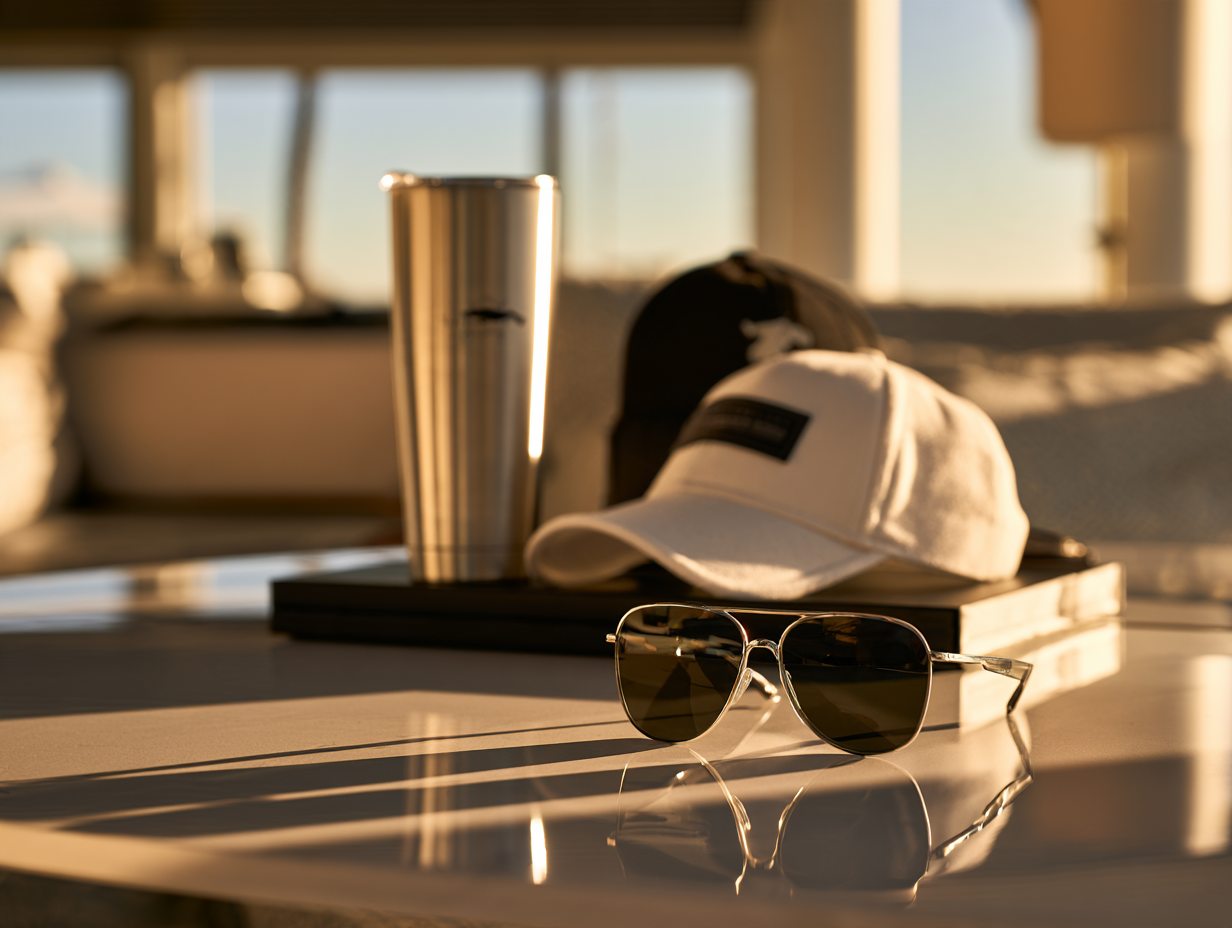
Unit cost: $30–$55 (for a premium, design-forward pair through a gifting activation). Keep rate: ~85–90%. Daily impressions: 30–60. Active use: 730–1,095+ days. This is the category that breaks the chart. Sunglasses are worn on the face — the single highest-visibility location on the human body. They're worn outdoors where foot traffic and social settings maximize impressions. A quality pair with on-trend styling becomes a daily-wear item for 300+ days a year. And the keep rate is extraordinary because recipients choose the style themselves. When the gifting experience includes a curated selection and personal fitting, virtually no one throws these away.
Why Keep Rate Is the Most Undervalued Metric in Event Swag
Look at the ranking again and notice the pattern. The single biggest driver of CPI isn't unit cost — it's keep rate multiplied by active use days. An item that costs $50 but gets kept and used for three years absolutely destroys a $2 item that hits the trash within a week.
Most planners optimize for the wrong variable. They compare unit costs across a vendor catalog and pick the item that lets them stay under budget while covering headcount. This logic makes sense if you're buying paper plates for a picnic. It makes zero sense if you're trying to generate lasting brand impressions.
The keep rate problem compounds with scale. At a 500-person event with $2 stress balls, you're spending $1,000 to generate maybe 3,150 total impressions (15% keep rate × 2 impressions × 14 days × 75 people who kept them). That same $1,000 allocated toward 20 premium sunglass gifts at $50 each would generate roughly 36,000 impressions per pair — or 720,000 total impressions from just 20 recipients. The math isn't subtle. If you're planning conference giveaways and wondering what gift ideas actually move the needle, stop buying in bulk and start buying with intent.
The On-Site Experience Factor: Why How You Gift Matters as Much as What You Gift
Raw CPI numbers tell most of the story, but there's a multiplier effect that doesn't show up in the formula: the gifting experience itself generates impressions before the item even leaves the event.
A bowl of branded pens on a registration table generates zero incremental impressions at the event. Nobody photographs a pen. Nobody posts it on social media. Nobody walks past the table and thinks, "I need to check out that brand."
An on-site gifting activation, on the other hand, creates a scene. When attendees see a curated display of premium sunglasses with personal styling and fitting, it draws a crowd. That crowd creates organic social sharing and earned media — Instagram stories, LinkedIn posts, group photos — that extend your brand reach far beyond the physical event. At trade shows specifically, this kind of activation drives booth traffic, increases dwell time, and generates qualified leads in ways a swag table never will.
The experiential component is also what pushes keep rates into the 85–90% range. When someone spends five minutes choosing their frame style, trying on different options, and getting a personal recommendation, they've formed an emotional attachment to the item before they walk away. That's not a freebie they grabbed off a table. It's a gift they selected. The psychology of ownership kicks in, and those sunglasses go in a purse or jacket pocket — not a trash can.
Budget Realities: What Premium Gifting Actually Costs at Scale
The most common objection to premium swag is budget. "We can't afford $40–$50 per person for 800 attendees." That's a fair concern — and it misframes the decision.
You don't need to gift every single attendee a premium item. Most best-in-class event gifting strategies are tiered. Broad-reach items (lanyards, small branded items included in welcome bags) cover everyone. Premium gifts target high-value segments: VIP attendees, key prospects, speakers, top-tier clients, or people who engage at specific activations.
A detailed cost breakdown for premium sunglass gifting at scale shows that most corporate activations run between $35–$55 per pair, depending on volume and frame selection. For a 200-person VIP segment within a 1,000-person event, that's a $7,000–$11,000 line item — comparable to what many organizations already spend on generic swag bags that get abandoned in hotel lobbies. And if you're wondering what a full activation involves from start to finish, the complete experience breakdown covers staffing, frame inventory, customization options, and logistics.
The real question isn't "can we afford premium gifting?" It's "can we afford to keep spending the same budget on items with 50x worse cost-per-impression?" For event planners who want to understand exactly what on-site gifting activations cost, the numbers are more accessible than most assume.
How to Apply This Framework to Your Next Event
If you're evaluating the best swag for corporate events and want to make decisions like a media buyer instead of a catalog shopper, here's the process:
- Define your impression goal, not your item quantity. Instead of "we need 500 items," ask "we want to generate 500,000 branded impressions over the next 12 months from this event." Then work backward through the CPI formula to determine which items and quantities get you there most efficiently.
- Tier your gifting strategy. Not every attendee needs the same item. Allocate budget toward premium, high-CPI gifts for your most important segments and supplement with functional (not disposable) basics for broader distribution.
- Prioritize wearables over desk items. Anything worn in public generates 5–20x more impressions per day than something that sits on a desk or in a bag. Sunglasses, premium headwear, and quality outerwear are the top three categories for a reason.
- Factor in the activation moment. A premium item delivered through an engaging, memorable experience generates more impressions at the event, drives higher keep rates post-event, and creates social sharing you can't buy with traditional advertising. Read the complete planner's guide to on-site sunglass activations to see how the logistics work in practice.
- Measure after the event. Track social mentions, survey recipients about item use at 30 and 90 days, and compare actual keep rates to your projections. This data makes every subsequent event more efficient.
The Bottom Line
Most corporate event swag is a waste of money — not because the items are bad, but because nobody applies basic performance metrics to the spend. When you run the numbers, premium items with high keep rates and daily public visibility don't just perform better than cheap giveaways. They perform better by orders of magnitude.
Designer sunglasses sit at the top of that ranking for a reason: face-level visibility, daily outdoor use across seasons, exceptional keep rates driven by personal selection, and an on-site gifting experience that generates its own wave of impressions and social proof. It's not a close competition.
Ready to see how a sunglass gifting activation would work for your next event? Read our complete FAQ to get answers on pricing, logistics, customization, and lead times — or reach out to the Ninety Six Shades team directly to start planning. Your swag budget deserves to work as hard as the rest of your marketing spend.